Around nine out of ten pages on the web get no organic traffic from Google at all, according to Ahrefs’ study of more than a billion pages. The reason is rarely bad writing or a missing plugin: nobody links to them. This backlink guide starts from that gap, because links are still how a search engine decides which pages deserve to be found.
A link from a relevant site works as a vote of confidence. It says that someone with their own reputation at stake thought a page was worth pointing at. That is why authority and relevance matter more than raw volume, and why the sites linking to you say more about your rankings than the number of links does.
What follows is written for marketers and business owners who need something they can act on. It covers the mechanics, the tactics that still work, the ones that will get a site penalized, and how to tell the difference before spending money on outreach.
By the end you should be able to look at a list of link opportunities and say which are worth a week of work, which are a waste of it, and which carry real risk. That judgment is most of the job.
What a backlink is, in plain terms

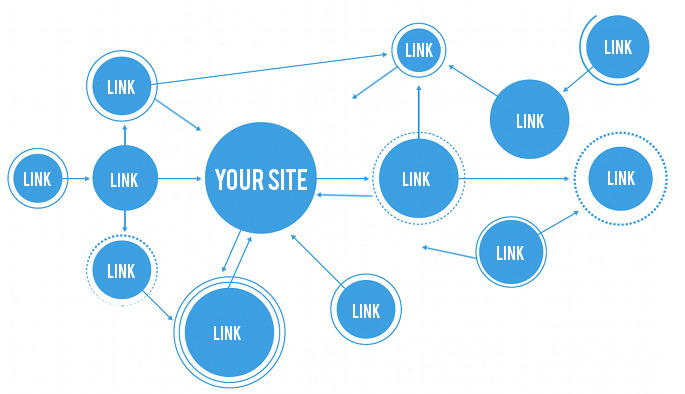
A backlink is a hyperlink on someone else’s site that points to yours. Links have been part of how Google ranks pages since the company existed, and the logic has not changed much: a link is a signal that a page is worth citing. Enough of those signals, from enough credible sources, and a page gets treated as an authority on its subject.
The term for the value a link passes is link equity, sometimes called link juice. It matters because links are not interchangeable. One link from a trade publication your customers actually read can outweigh fifty from sites nobody visits.
That is the frame worth keeping: acquiring external links is an investment in authority, not a line item to minimize. When a relevant site links to you, it is telling Google your page belongs in the conversation. Nothing you do on your own site sends that signal as clearly.
The other term to get straight is anchor text: the visible, clickable words of a link. Anchor text tells a search engine what the destination is about, which is why a link reading “email deliverability checklist” does more for a page on that subject than one reading “click here.”
Everything else in link building is downstream of one idea: the quality of the sites linking to you beats the count, every time. Most of the bad advice in this field comes from ignoring it.
Why links still decide who ranks
Links do three things at once. They move a page up in results, they bring referral traffic of their own, and they build the recognition that makes the next link easier to get. Most teams only measure the first.
Backlinko’s analysis of search results found that pages with more referring domains tend to rank higher, and the pattern has held across repeated studies. Links are also how Google finds pages in the first place; a page nobody links to can sit unindexed for months. That is the mechanism behind the figure above, and most pages get no traffic for exactly that reason.
If a site publishes consistently and still does not appear in results, the problem is usually not the content. It is that the content has nothing pointing at it.
- Organic traffic does not follow good writing on its own; a search engine needs external signals, and links are the strongest one available.
- Authority compounds. The sites that already link to you make the next pitch easier.
- A healthy link profile buys credibility, which matters in any market where buyers compare vendors before calling one.
- External links speed up discovery and indexing of new pages.
- In crowded categories, links are often the only lever that closes the gap with an incumbent who published first.
| Benefit | What it looks like in practice |
|---|---|
| Higher rankings | Quality backlinks lift visibility for the pages they point at. |
| Referral traffic | Links on sites your buyers read send visitors directly. |
| Faster indexing | Links give crawlers a path to new pages. |
| Recognition | Being cited by credible sources builds trust independent of search. |
None of that happens in a month. Link building pays on a horizon of quarters, which is exactly why most sites abandon it shortly before it starts working.
Types of links and how they are acquired
Links arrive in three ways, and the difference matters because it determines how much control you have and how much risk you take on.
Natural links happen when someone finds your page on their own and cites it. Outreach links are the ones you ask for: you identify a relevant site, pitch something worth linking to, and sometimes get a yes. Most serious link building is this second category, and the response rate is lower than any vendor will admit.
Self-created links are the ones you place yourself, in forum signatures, directory listings and comment fields. Worth being blunt here: their value is close to zero. They are not dangerous in small numbers, but they do not move rankings.
The other split is by how far a tactic strays from Google’s guidelines: white hat, gray hat and black hat. This is not a purity test. It is the line between a strategy you can keep running and one manual action away from losing a site’s traffic overnight.
Recovery from a link penalty is slow and often incomplete. White hat work, meaning placements in publications that already have an audience, takes longer to show results and does not evaporate when an algorithm updates.
| Approach | Upside |
|---|---|
| White hat | Durable; authority survives algorithm updates. |
| Gray hat | Faster than earning every link outright. |
| Black hat | Immediate movement. |
For anything you intend to still own in three years, white hat is the only approach that makes sense. The shortcuts work until they do not, and the failure is not gradual.
What makes a backlink worth having
Five things separate a link worth a week of outreach from one worth ignoring. Learning to read them quickly is the difference between a productive quarter and a long list of placements that changed nothing.
Authority first. Third-party metrics, such as Moz’s Domain Authority, Ahrefs’ Domain Rating and Majestic’s Trust Flow and Citation Flow, are estimates rather than Google’s own scores, but they work as proxies. A link from a publication your industry actually reads is worth more than its score suggests; a link from a high-scoring site with no readers is worth less.
Topical relevance comes next. A link from a technology outlet to a software page carries weight a link from a recipe blog never will, whatever the metrics say. The connection between the linking page’s subject and yours should be obvious to a human reading it.
Placement on the page matters. A link inside the body of an article, surrounded by related text, is treated differently from one buried in a footer or sidebar template. It also stands a chance of being clicked, which is the part people forget.
Anchor text should describe the destination and read like something a person would write. A profile where most links use the same exact-match phrase looks engineered, because it is. A natural distribution skews toward brand names, bare URLs and descriptive phrases, with exact-match keywords a clear minority.
Finally, dofollow versus nofollow. A dofollow link passes equity; a nofollow one, now treated as a hint rather than a directive, generally does not. A profile that is one hundred percent dofollow is itself a signal, because real sites accumulate a mix, including nofollow links from social platforms and aggregators.
Run a prospect through those five and the decision usually makes itself. Most of the links people chase fail on relevance, which is the one factor no tool scores for you.
Tactics that still earn links
What follows are the approaches that still work, roughly in order of what they return for the effort. None of them are fast.
Guest posting on sites that have an audience
Writing for publications your buyers already read does two things: it earns a contextual link, and it puts your name in front of people who might remember it. The test for whether a guest post is worth writing is simple. Would you still want the placement if the link were nofollow? If not, the site is a link farm with a masthead.
Broken link building
Find a dead link on a page with authority, then offer your own page as the replacement. It works because you are solving a problem for the person you are asking: their page is broken either way. Response rates beat cold outreach, and the pitch writes itself.
Building assets people cite: original data, studies, tools
Original research is the most reliable way to accumulate links without asking for them. A survey of your own customers, a dataset nobody else has published, a calculator that saves someone an hour. These get cited for years. It is the most expensive tactic up front and the cheapest over time.
Journalist sourcing platforms, after HARO
For years the standard advice here was HARO, Help a Reporter Out. It was folded into Cision’s Connectively and that service shut down at the end of 2024, so any guide still recommending it by name is out of date. The model survives in replacements such as Qwoted, Featured and SourceBottle, and in reporters posting requests directly on social platforms. The mechanics are unchanged: answer fast, say something specific, and do not pitch your product.
Unlinked brand mentions
Someone writes about your company and does not link to you. This happens more often than most teams realize, and a polite note converting the mention into a link is the cheapest placement available. Set an alert for your brand name and check it weekly.
Each of these rewards consistency more than cleverness. A team running two of them steadily for a year ends up with a profile a competitor cannot replicate in a quarter, regardless of budget.

Tools worth paying for
A link building stack does not need to be expensive, but it does need to answer one question quickly: is this prospect worth my time? Everything below exists to shorten that decision.
Semrush for prospecting and outreach tracking
Semrush’s Link Building Tool pulls prospects from your competitors’ profiles and tracks the state of every pitch in one place. The tracking is the part that matters, because outreach fails more often from disorganization than from bad targets.
Ahrefs, Moz and Search Console
Ahrefs and Moz are the standard tools for seeing your own link profile and your competitors’. Their crawls differ enough that the same site can score differently in each, so pick one and stay with it rather than comparing numbers across tools.
Search Console is free and non-negotiable. It shows the links Google itself has recorded, which is the only authoritative list, and it is where a manual action would appear if one ever landed.
Finding contacts and sending the pitch
Hunter.io and similar services find the editor’s actual email address, which removes the most common reason outreach fails: it went to a contact form nobody reads. Pair it with anything that tracks replies, even a spreadsheet.
Resist the urge to buy the whole stack. One prospecting tool and one outreach tracker, used consistently, outperform six subscriptions nobody opens.
Mistakes that cost sites their rankings
These are the errors that show up repeatedly in audits, ordered roughly by how much damage they do.
Buying links in bulk and private blog networks
Paid link networks and PBNs are the fastest route to a manual action. The results look real for a few months, which is what makes them tempting, and the pattern of sudden volume from unrelated sites with matching footprints is exactly what Google’s systems are built to find. Cleanup takes longer than the gains lasted.
Over-optimized anchor text
If a large share of your inbound links use the same exact keyword phrase, the profile reads as manipulated. Real links do not converge on one phrase, because real people describe things differently. This one is common even among sites doing everything else correctly, usually because someone specified the anchor in every outreach email. Anchor variety follows from targeting a spread of specific terms rather than one head term.
Links with no relevance
Placements on sites unrelated to your industry are money spent for nothing. They do not help, and in volume they make a profile look purchased. Relevance is the filter to apply before any metric.
Never auditing the profile
Toxic links accumulate quietly: scraped content, hacked sites, networks you never asked to be part of. Checking the profile quarterly catches them while the fix is still the disavow tool rather than a reconsideration request.
Outreach with nothing behind it
The most common failure is not a tactic at all. There is nothing on the site worth linking to. No outreach sequence rescues a page that offers a prospect’s audience nothing, and if the pitch has to oversell the page, the page is the problem.
A quarterly audit catches most of this. It is an hour of work that prevents the kind of problem that takes two quarters to undo.
| Mistake | Consequence |
|---|---|
| Buying links in bulk | Manual action and lost traffic. |
| Over-optimized anchors | Profile reads as manipulated; rankings suppressed. |
| Irrelevant placements | Budget spent with no ranking effect. |
| No profile audit | Toxic links accumulate unnoticed. |
| Nothing worth linking to | Outreach fails regardless of volume. |
How to tell whether any of it is working
Counting links is not measurement. The question is whether the links you earned changed the position of the pages you care about, and answering it takes three different numbers.
Authority metrics, and what they are good for
Domain Authority and Domain Rating estimate how a domain is likely to perform; Trust Flow and Citation Flow separate link quality from link quantity. None of them is a Google metric. Use them to compare prospects against each other, not to report progress, because they move slowly and imprecisely.
Referral traffic and target keyword positions
Referral traffic from each placement sits in your analytics, and it answers a question the authority metrics cannot: did a real person click? Then check whether the pages receiving links are moving for their target queries. If authority is climbing and positions are not, the links are landing on the wrong pages.
Referring domains, not link count
Measure growth in unique referring domains. Fifty links from one site are one vote cast fifty times; five links from five sites are five votes. Most reporting inflates the number by counting the wrong thing.
Expect three to six months before authority gains show up in positions, longer in competitive categories. The teams that get results are the ones who keep going through the stretch where the numbers have not moved yet.
Reading a competitor's link profile
The fastest way to find opportunities is to look at who already links to the sites outranking you. Their profile is a list of publications that have proven willing to link to something in your category.
Finding the placements you can replicate
Pull a competitor’s referring domains, sort by relevance and look for the pattern. The same handful of publications, roundups and resource pages usually accounts for most of their profile, and those are the places to start, because a site that linked to a competitor has already decided your topic is worth covering. Note which of their pages attract the links, too; that tells you what to build.
Watching for lost and toxic links
Links disappear constantly. Pages get rewritten, sites shut down, editors prune old articles. Recovering a lost link is usually easier than earning a new one, since the relationship already exists, and the same check surfaces toxic links early enough to disavow them.
Filtering so the list stays usable
A raw export of competitor domains runs to thousands of rows, most of them worthless. Filter by relevance and traffic first, then by authority, and work the top of that list. Chasing every available link is how link building turns into busywork.
The teams that win at this are not the ones with the cleverest tactics. They are the ones still running the same process in month eighteen, usually as one part of the SEO campaign this belongs to.
Putting this backlink guide to work
The place to start is an audit, not an outreach campaign. Pull your current profile, see which pages have links and which have none, and compare that against the pages you actually need to rank. The gap between those two lists is your plan for the next quarter, and it slots into whichever type of SEO you decided to run first.
A few things worth keeping in mind as you start:
- Budget matters less than consistency. A small number of good placements every month beats one expensive burst.
- Skip the shortcuts. Authority comes from relevant links and pages worth citing, and there is no version of this that works faster.
- Industry associations, trade publications and local business organizations are undervalued; one link from any of them often beats a dozen from generic sites.
- Decide which pages need links before you look for any. Links pointed at the wrong page are wasted.
- Measure referring domains and keyword positions rather than link totals, and review both quarterly.
- Three to six months is the honest timeline. Anyone promising faster is selling risk they have not mentioned.
Frequently asked questions
What is link building?
Link building is the process of getting other websites to link to yours. Those links help search engines find your pages and judge how much authority they carry, which affects where they rank.
Why do backlinks matter for SEO?
A search engine treats a link as a signal that someone else found a page worth citing. A profile of relevant, credible links is one of the strongest factors in whether a page ranks, and it brings referral traffic directly as well.
What types of backlinks are there?
Broadly three: natural links someone gives you unprompted, outreach links you earn by pitching, and self-created links you place yourself in directories or forums. The third category carries almost no weight.
How do you get quality backlinks?
Through guest posts on publications with real audiences, broken link building, original research and tools that get cited, journalist sourcing platforms, and converting unlinked brand mentions. All of them depend on having a page worth linking to.
What are the most common link building mistakes?
Buying links in bulk, reusing the same exact-match anchor text, collecting placements on irrelevant sites, and never auditing the profile for toxic or lost links.