Call to action marketing phrases are the few words that decide whether someone acts now or closes the tab. They are not decoration on an advertisement; they are the last thing a buyer reads before deciding, which makes them the highest-leverage copy you will write.
Most are written in a hurry, chosen because they sound confident, and never tested. What follows is a working bank of phrases organized by channel and by sector, with the reasoning for why each one works, so you can adapt rather than copy.
The point is to stop improvising. A phrase that communicates a concrete advantage — how fast it ships, what happens if it is wrong, who else already bought it — outperforms a clever line that says nothing.
What makes a phrase do work

These are not slogans. A slogan builds recognition over years; a call to action asks for a decision in the next five seconds. Both matter and they are written differently, and confusing them is the most common error.
The ones that work share a structure: they name a benefit the reader already wanted, remove a specific risk, or make the cost of waiting visible. Emotion helps because emotional content is remembered longer, but emotion without a concrete claim is just tone.
Their function is to shorten the gap between interest and action. In a crowded market the words are often the only thing distinguishing two comparable offers, which is why they repay the time spent on them more than almost anything else in a campaign.
When a buyer hesitates, the right phrase at the right moment shortens the sales cycle. That is the whole mechanism — not persuasion in the abstract, but removing the specific thing that was stopping them.
And the constraint: a phrase can communicate speed, personalization or specialization only if those are true. An empty promise damages more than a bland line, because the buyer finds out and the discovery attaches to everything else you said.
The four tests a phrase has to pass
Before anything goes live, run it through four questions. A phrase that fails any of them is not ready, however good it sounds read aloud.
Does it persuade without overclaiming?
Use verbs that imply action and claims you can defend. “Shipped the same day” is persuasive and checkable; “the best on the market” is neither. The test: could a customer prove you wrong? If yes, rewrite it.
Does it carry any feeling?
Positive associations are what survive in memory. Decide which two values you want attached to the brand and check that the phrase carries one of them. If it reads as though any competitor could have written it, it carries none.
Is it short enough to land?
Fewer words, more force. Motorola’s “Hello Moto” worked on two words and a tone. But brevity is not the goal — clarity is. A short confusing phrase is worse than a longer clear one, and every word has to earn its place.
Will anyone remember it tomorrow?
Test it where the brand actually talks to people: in a story, an ad, an Instagram bio, a WhatsApp message. A phrase that works in a document and dies in a feed is not a phrase, it is a draft.
Call to action marketing phrases that work anywhere
These transfer across sectors because each one answers an objection rather than describing a product, and the objection is rarely the one the buyer states. Adapt the wording; keep the mechanism.
Phrases for everyday use
Six that earn their place in almost any business:
- “Our most reordered item” — social proof that is specific rather than vague. Harder to dismiss than “customer favourite”.
- “Thirty days to change your mind” — removes the risk the buyer is actually weighing.
- “The one most people end up choosing” — does the comparison work for someone who does not want to do it.
- “Ends Sunday” — a deadline with a date beats “limited time” every time.
- “Not sold anywhere else” — exclusivity, and only usable if true.
- “Made for exactly this” — specificity reads as understanding the problem.
Why these particular ones work
Each addresses a question the buyer has not asked out loud. “Ends Sunday” answers why now. “Thirty days to change your mind” answers what if I am wrong. “Our most reordered item” answers whether anyone else thought this was a good idea. The phrasing is interchangeable; the question being answered is not.
Adapting them per channel
The same phrase does not survive every context. What reads as confident in an advertisement reads as pushy in a direct message:
- Instagram stories: short, legible at a glance, built to sit over an image.
- Paid ads: lead with the benefit and the deadline, because you are interrupting.
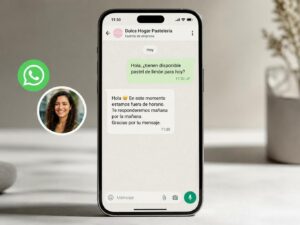
- WhatsApp and direct messages: conversational and specific. Anything that sounds like an advertisement here gets ignored.
- Email subject lines: concrete over clever, because the competition is thirty other subjects.
And a phrase should not be written for one placement. The good ones work in a bio, a product page and a sales conversation, which is also the test of whether it says something real.
| Phrase | Objection it answers | Best placement |
|---|---|---|
| Our most reordered item | Has anyone else chosen this? | Product page, social |
| Thirty days to change your mind | What if it is wrong? | Checkout, email |
| Ends Sunday | Why now? | Ads, stories |
| Not sold anywhere else | Could I get it cheaper? | Product page |
Phrases by sector
Every sector has a register its customers expect. Getting it wrong is more noticeable than getting it bland. What follows is written in English rather than translated, because a phrase that has been translated stops being a phrase.
Clothing and fashion
Fashion sells an idea of the buyer, not a garment. “Dress like today matters.” “Nothing in here is boring.” “The one you will actually wear.” The last is the most commercial of the three, because it answers the real objection in clothing: that it will hang unworn.
Technology
Position the product as a solution rather than a specification. “Built for the way you actually work.” “Set up in ten minutes.” “The upgrade you stop noticing.” Technology buyers respond to reduced friction more than to capability, which most technology copy gets backwards.
Food and hospitality
Make it sensory and specific. “Made this morning.” “The recipe has not changed in thirty years.” “Still warm when it reaches you.” Specificity is what distinguishes appetite from advertising — “delicious” says nothing, “made this morning” says everything.
Beauty and personal care
Sell the result and the time it lasts. “Book the hour, keep the fortnight.” “You will want a photograph of this.” “The appointment you look forward to.” These work because the purchase is an hour of being looked after, and the copy should say so.
Gifts and flowers
The product is the moment, not the object. “Arrives before you do.” “Say it before the moment passes.” “They will remember who sent it.” Timing is the anxiety in this sector, and a phrase that resolves it outperforms any description of the product.
Pets
Speak to the owner about the animal. “Looks after the one who looks after you.” “Vet-approved. Dog-tested.” “The care they would ask for.” The emotional bond is the purchase driver, and the only mistake available is being cute about it.
The register of your sector is not decoration; it is how customers expect to be addressed. Borrow the mechanism from these and write your own words — a phrase that is recognizably from somewhere else works against you.
| Sector | Example | What it does |
|---|---|---|
| Fashion | The one you will actually wear | Answers the real objection |
| Technology | Set up in ten minutes | Removes friction, not features |
| Food | Made this morning | Specific beats appetizing |
| Beauty | Book the hour, keep the fortnight | Sells duration |
| Gifts | Arrives before you do | Resolves the timing anxiety |
| Pets | Looks after the one who looks after you | Addresses the owner |

Using them in digital marketing
The phrase and the placement are one decision. The same words succeed and fail depending on where they land.
Social platforms and messaging
For feed advertising, these carry weight:
- “One click away” — removes perceived effort.
- “Shipped same day, tracked all the way” — two concrete promises in seven words.
- “If you need it, we have it” — availability, which is the quiet objection in retail.
- “Delivered to your door” — convenience, stated plainly.
On image-led platforms the words support the picture rather than carrying the message. Short, high contrast, and readable at thumbnail size — which usually means under six words.
Ads, bios and posts
In paid advertising the call to action must be unambiguous, because you interrupted someone. In a profile bio, the job is different: compress the proposition into one or two lines that make clear what you sell and to whom, which most bios do not manage.
Context decides the tone
A phrase that reads as energetic in an advertisement reads as aggressive in a direct message. Messaging apps sit beside family conversations, and copy that ignores that gets read as an intrusion. The register has to change even when the offer does not.
The practical rule is to write the phrase for the narrowest context first — usually the message or the subject line — and then expand it for the places with more room. Going the other way produces advertising copy pasted into a conversation.
Mental triggers, and using them honestly
Four triggers account for most of what makes a phrase work. All four are legitimate and all four are easy to abuse, and the abuse is detectable by the customer.
Urgency and scarcity
The strongest and the most abused. “Last few left.” “Only until tomorrow.” They work because losing an option feels worse than gaining one. They stop working the moment a customer notices the deadline moved.
A specific limit is more credible than a general one: “Free shipping on the first ten orders” beats “limited offer” because it is checkable, and checkable claims are the only ones that keep working.
Exclusivity and anticipation
“Limited edition.” “Three days until it opens.” Anticipation is the underused half: building expectation before a launch costs nothing and makes the launch day work. A countdown only functions if something actually happens at the end of it.
Social proof and authority
“Our best seller this week.” “Most customers order it again.” Specific proof beats a percentage, and any number you use has to be true and traceable — a fabricated statistic in a sales phrase is the fastest way to lose a customer who checks.
A benefit the reader can calculate
“Buy today, twenty percent off the next order.” The buyer should be able to work out exactly what they get. Vagueness here reads as a trick, and a phrase that requires interpretation has already lost.
All of this depends on honesty. Overused triggers produce fatigue, and a customer who notices the urgency was manufactured discounts everything else you say. The triggers are tools for communicating something true faster, not for creating something that is not there.
Which is also the practical reason to rotate them. A business whose every message is urgent has taught its customers that urgency means nothing.
| Trigger | Example | Fails when |
|---|---|---|
| Urgency | Last few left | The deadline moves |
| Scarcity | Free shipping on the first ten orders | The limit is not real |
| Exclusivity | Limited edition | Everything is limited |
| Social proof | Our best seller this week | The number is invented |
| Benefit | Twenty percent off the next order | The reader cannot calculate it |
Phrases for a new business
At launch the words do a different job: they establish who you are before anyone has an opinion. Clarity matters more than character at this stage.
The phrase should carry what the business is for. “We handle the part you dread.” “Built for the job you have, not the one in the brochure.” Both communicate a proposition without claiming excellence, which is what a new name cannot credibly claim.
For a small or new company, three things belong in the message: the name, one specific benefit, and the outcome. That combination is what survives a first encounter.
Examples for a new or small business
Phrases that work before anyone knows you:
- “Everything you need in one place” — convenience, immediately legible.
- “We make the complicated part simple” — a promise any customer can evaluate.
- “Your first order arrives Thursday” — specificity in place of reputation.
- “Answered by the person who makes it” — turns being small into the advantage.
- “Your partner in [your field]” — generic, and it works when the field is named precisely.
Avoid “we are the best”. It carries no information, it cannot be verified, and from an unknown name it reads as a reason for suspicion rather than confidence.
Trust is not built by one phrase. It comes from the same message holding up across the shop, the messaging app and the invoice. Inconsistency between those three is noticed faster than a weak line.
The fourth phrase in that list is the one most new businesses miss. Being small is a disadvantage in capability and an advantage in access, and saying so directly converts better than pretending to be larger.
| Phrase | What it communicates |
|---|---|
| Everything you need in one place | Convenience |
| We make the complicated part simple | A verifiable promise |
| Your first order arrives Thursday | Specificity instead of reputation |
| Answered by the person who makes it | Small as an advantage |
Adapting phrases to the audience
The same offer needs different words for different buyers. This is the step that separates copy that converts from copy that is merely correct.
Start by knowing the customer rather than imagining them. What they need, what they expect, and what is actually stopping them. Direct observation and your own data beat assumptions made at a desk, and the gap between the two is usually large.
Then match the register to the segment. A phrase that lands with a twenty-five-year-old buying for themselves will not land with a fifty-year-old buying for a company, even when the product is identical. The difference is not formality; it is which risk each one is weighing.
Use the words your customers use. Reading how they describe the problem in reviews and messages gives you better copy than any brainstorm, because it is already in their vocabulary.
| Segment | Phrase | Risk it addresses |
|---|---|---|
| Younger buyers | Make it yours | Looking like everyone else |
| Professionals | Save the hour, keep the result | Wasted time |
| Parents | The one you will not worry about | Getting it wrong for a child |
| Pet owners | The care they would ask for | Not doing enough |
Watch how your audience writes on social platforms: which words, which tone, how much punctuation. Reflecting that without imitating it is the difference between sounding familiar and sounding like an impression.
The research method is unglamorous and free: read the reviews of your competitors, read your own incoming messages, and write down the exact phrases people use to describe what they want. Most good copy is quoted rather than invented.
Personalizing is not swapping a pronoun. It is changing the benefit, the tone and the trigger for each type of buyer, which means one offer may need three phrases rather than one.
Phrases for a sales team
In conversation the phrases do a different job again: they handle an objection that has just been said out loud.
Handling objections
Five that work because they open the conversation rather than closing it:
- “If it is not right, send it back within thirty days and we refund it” — removes the risk being weighed.
- “This solves the [specific problem] you mentioned” — only works if you listened.
- “What would need to be true for this to work for you?” — surfaces the real objection, which is rarely the stated one.
- “Is there anything I can do to settle this today?” — direct, and acceptable once.
- “What is making you hesitate?” — the most useful question in sales, and the one most often skipped.
Scripts, and their limits
A usable script covers four moves:
- Earn attention in the first sentence.
- Establish relevance to this specific buyer.
- Make the benefit concrete.
- Ask for the decision.
The value of a script is that nobody goes blank. Its risk is that it gets read aloud. A script should set the structure and leave the wording to the person, because a recited sentence is audible as one.
Listening before answering
Every buyer arrives with a different problem, and the team has to show it understood before offering anything. “I understand this is not the moment — can I ask what brought you to us in the first place?” works because it accepts the no and keeps the conversation open.
A team with clear phrases and a loose script sells more than one with either alone. And the phrases should come from the same bank marketing uses, so the message a customer sees in an advertisement is the message they hear on the phone.
That alignment is the unglamorous part and the one that produces most of the gain. A customer who hears a different proposition from sales than the one that brought them in loses confidence in both.
Testing and replacing them
No phrase guarantees anything. What produces results is testing and replacing, which means treating phrases as drafts rather than as assets.
Test where the brand actually talks: stories, ads, messages, subject lines. The same phrase performs differently in each, and a phrase that failed in one place may be the best one you have in another.
And the only criterion that matters: if it does not convert, it is not working, however good it sounds. A phrase everyone in the company likes and nobody responds to is a phrase to replace, and that decision is harder than writing a new one. The other advertising decisions these phrases sit inside decide how much the wording can carry.
The practical starting point is three phrases, not thirty. Take three from this article, adapt them to what you actually sell — by hand, or with one of the tools that drafts variants quickly — run them for two weeks against what you were using, and keep whichever one wins.
Frequently asked questions
What makes a call to action phrase work?
It answers a question the buyer has not asked out loud: why now, what if I am wrong, has anyone else chosen this. The phrasing is interchangeable; the question being answered is what does the work.
How do you write one that does not overclaim?
Make every claim checkable. “Shipped the same day” is persuasive and verifiable; “the best on the market” is neither. The test is whether a customer could prove you wrong.
How do phrases change by sector?
Each sector has a register its buyers expect and a specific objection worth answering — in clothing, that it will go unworn; in gifts, that it will arrive late. Borrow the mechanism from examples and write your own words.
How do mental triggers work without manipulating?
Urgency, scarcity, exclusivity and social proof all work by communicating something true faster. They fail when the deadline moves, the limit is not real or the number is invented, and a buyer who notices discounts everything else you said.
How do you adapt phrases to different buyers?
Change the benefit, the tone and the trigger per segment, not the pronoun. One offer often needs three phrases, because each type of buyer is weighing a different risk.